Category: Dailies
Yanks may need a co-starting catcher
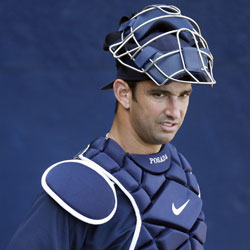 WHO WILL HOLD THE UMBRELLA OVER JORGE POSADA WHEN A RED SKY RAINS BITTER TEARS?
In the past weeks the rumors have been circulating that Jorge Posada won’t be ready for the spring training kickoff. These rumors were confirmed by Brian Cashman himself: “Posada will not be able to catch by the exhibition opener Feb. 25, Cashman said, but he is on track to be ready for the regular-season opener April 6.” Now, you have to take that with a grain of salt the size of the Biggest Ball of Twine in Minnesota. The Yankees won’t know for sure what shape Posada’s catching skills are in until he actually squats down and does the deed. They won’t know how his throwing is until he, well, throws. They won’t know how the arm snaps back from use until he uses it. And so Posada’s ability to catch this season–how well, how often, if at all–still hangs in doubt. And don’t forget that the injury also affected Posada’s hitting as well, his power all but vanishing.
At this writing, the one thing that seems certain is that the days when the Yankees could count on Posada for 140 or more games are gone. That presents a problem, a familiar one. The only other catchers on the 40-man roster are Jose Molina and Francisco Cervelli. The Yankees have also invited five non-roster backstops to camp. Kevin Cash is the only member of that quintet who possesses major league experience, though most of that experience is comprised of making outs. The same thing goes for Molina, and is also indicated in any reasonable forecast for Cervelli, who, thanks to that pointless spring training collision, has yet to play in any meaningful way above High-A. Given his offensive shortcomings, which include the complete absence of power (he even slugged a lowly .350 in the Venezuelan Winter League), the Yankees would be wise to ticket him to Double-A and let him play his way upward, proving that his one solid hitting tool, his batting eye, stays with him as he climbs.
Unless the Yankees make a trade for a young catcher who can “apprentice” with Posada the way Posada did with Joe Girardi–as self-defeating as that apprenticeship probably was for everyone involved save Girardi–at least 40 games, possibly more, will be in the hands of Molina, which is about 40 games too many. Molina is a very good defensive catcher, such that if a team with basestealing talent comes through town he’s worth a spot start or two. The Yankees have the Phillies on their interleague schedule this year, a team which not only runs frequently, but picks its spots exceptionally well. That might be a series where it would be worthwhile to see a lot of Molina, ditto the odd game against the Rays. The rest of the time, Molina is an anchor, capable of competing for the title of Worst Hitter in the Game. With Brandon Inge heading back to third base, he is almost certainly the worst-hitting catcher in the game.
Now, you might be saying, “But Stevie, catching is such a scarce commodity that most reserve catchers can’t hit!” True, but (A) no one says the Yankees have to settle for the weakest of the lot, (B) with Posada possibly reduced to part-time status, we’re not talking about a reserve, we’re talking about a co-starter, and (C) even if not, there is no reason to ignore the strategic advantage that depth at the position confers; your team achieves offensive consistency at catcher 162 games a year, while the other guy vents at least a quarter of his schedule on, well, Jose Molina.
In fairness, achieving such depth might not always be possible. Yet, for the Yankees, given their awareness of Posada’s indeterminate state, need to make replacing Molina a priority or risk losing any close pennant race. They’ve already blocked the Red Sox off of Mark Teixeira this winter. Now it might be wise to block them off of Miguel Montero of the Diamondbacks. Right now, the D’backs seem to be holding out for a big return on the 25-year-old, and the Yankees are starting to run out of fungible Jeff Marquez types. The good news is that if Montero is too big a target, there are many catchers loose in the jungle, almost any of whom is likely to outhit Molina in a part-time role.
No doubt I will get comments saying, “Cripes, fat, bearded Pinstriped Bible guy! The Yankees have Teixeira! They have A-Rod! They signed every starting pitcher of woman born! They can afford to let 300 at-bats of catching slide to the replacement level!” To this I say, maybe they can and maybe they can’t. Last year should have taught us, and the Yankees, never to take anything for granted. Their actions this winter indicate that they have learned that lesson very well, but there is still–always–one more thing to do.
A QUICK WORD ON THE ORIOLES TRADING FOR PIE
The Orioles have now completed an outfield that should be death to flying things in Felix Pie, Adam Jones, and Nick Markakis. Other than Markakis, I don’t have complete confidence in how the lot will hit, but Matt Weiters taking over at catcher at some point this season (and Gregg Zaun backing up–another guy who might have helped the Yankees, though he’s fading fast), Aubrey Huff boosting up their first base production, and even pathetic Cesar Izturis upgrading shortstop, the O’s lineup is going to have more substance on both sides of the ball than it has in years. Pitching remains a concept, but at least those Yankees-O’s games won’t be such predictable snoozefests this year. The AL East just became even tougher. Fortunately, the Blue Jays’ pitching staff has been so decimated that they’re likely to supply the requisite Free Parking quotient. The Perfect Division will have to wait for another year.
MORE FROM ME
With my time on the Baseball Prospectus over, Wholesome Reading is back. I have a couple of posts up now and will be adding more on a frequent basis. Today’s short stack o’ sermons has a musical bent inspired by Sunday’s concert for Obama in Washington, and touches on Woody Guthrie, Buddy Holly, “American Pie.” I’ll also be posting reactions to Mr. Obama’s inaugural address on Tuesday. Haven’t gotten to type this in a long time: Warning! Politics!
Talk around the Hot Stove
 OPENING VOLLEY
Saw a headline on ESPN.com just now that said, “Braves to consider bringing back Glavine, Jones.” I’m guessing that if you click on it, you also find out that they’re willing to think about bringing back Spahn, Sain, and the rain prayer.
AND IN ANOTHER PART OF THE FOREST
No doubt you’ve seen that the Red Sox locked up Kevin Youkilis for four years, with an option for a fifth year. While it seems highly likely that Youkilis’ production is going to get dialed back a bit this coming season, he’s still a productive player at his old level, and if he can play third base next year, he’ll up his value while allowing the Red Sox to make room for first baseman Lars Anderson, who looks like he’s going to be a very Youkilis-like hitter. Best of all, the length of time is right. The Red Sox will monopolize whatever good years Youkilis has left, then let some other team pick up the tab on his decline phase.
YET ANOTHER PART OF THE FOREST (IT’S AN XXL FOREST)
I’m a bit confused by the Michael Young controversy in Texas. If you haven’t been following the bouncing shortstop, Young is getting pushed from that position to third base to make room for prospect Elvis Andrus. Now, Young is kind of a Jeter out there, a good hitter for his position but not the rangiest cat in the jungle, so the move does make some sense. The problem is, Andrus turned 20 in August and hasn’t played above Double A. He looks like he has the defensive tools to play short now (the Rangers clearly think so), but the problem is that his bat seems very unlikely to carry over — he hit .295/.350/.367 at Double A, but you start applying filters to that and you get a Major League line where his power and OBP are non-existent. The Rangers will bat him at the bottom of the order, let him steal some bases when/as/if he gets on base, and pray that it works out, because after all this drama about moving Young, they can’t just yank him back to short if things don’t work out.
You can smell some kind of additional move coming up, along the lines of the one the Orioles executed today when they signed Gregg Zaun as Matt Wieters insurance. The way the free agent market is (not) moving, they might be able to pick up a David Eckstein or Orlando Cabrera to battle Andrus in Spring Training — and win. It will benefit everyone if the Rangers’ plan doesn’t pay off. Andrus might be pretty good someday, but all the Rangers will succeed in doing by bringing him to the Majors so early is make sure he’s really expensive at 22 and with another organization at 27. The Rangers will let him learn on the job, but some other club will reap the benefit, and/or they’ll have to pay for the privilege of getting to the god stuff.
A QUICK GRAB FROM THE COMMENTS
I messed up yesterday and credited Buzah for the Jim Rice home/road comment when it should have been Charlie F. Apologies, guys. Now that I’m awake again after a long winter’s book season, I’ll get the details right in the future. Now here’s something that Buzah did say:
Though I think Rice has no place in the Hall, that was not me you were quoting above. Anyway, your YES colleague Ken Singleton was a better player, for Pete’s sake, as were former Yankees like Rock Raines, Charlie Keller and Tommy Henrich.
I’m not just saying this because he’s a colleague: Mr. Singleton was a great, great, great hitter. He doesn’t get the credit he deserves because his peak started a little late and ended a little early, he wasn’t a great baserunner or defender, and the 1970s and early 1980s suppressed his stats. However, if you look at the numbers for each of his seasons, he was a top-five producer in the AL year after year. If you check out Singleton’s translated stats, which adjusts his numbers so he and everyone in history played in the same place at the same time, he rates as a .292/.399/.503 hitter, just a devastating combination of power and selectivity. Rice comes out at .290/.350/.535 — good, but not close to switch-hitting Singleton, and it’s not like Rice was a better fielder or baserunner.
And on that note, I bid you, and Kenny, a fine weekend. Stay warm!
The young, the well-traveled, the ugly
 THE MIDNIGHT TRAIN TO STAMFORD
Thanks to today’s winter event and my being a Cyclops, I missed it. I’ll be back in the Bunker next week. In the meantime, the Yankees have released a list of 20 non-roster invitees to Spring Training. The invitees break down into three categories: journeymen vets, up-and-coming prospects who are there just to bask in the Major League glow and guys who are around because you need a lot of extra bodies in Spring Training and won’t make the roster barring some kind of global catastrophe so bad that none of us will be paying any attention to baseball anyway.
Let’s start with the last category first:
GLOBAL CATASTROPHE BODIES
Kyle Anson, C: He only reached High-A last year, but he’s already 25. He only has two seasons in at catcher, having been drafted as a third baseman, but he hasn’t shown enough with the bat to be interesting. There are a lot of pitchers in Spring Training, and they all need a guy with a glove to help warm them up, so here’s Anson.
P.J. Pilittere, C: A three-time Yankees NRI, Pilittere just repeated Double-A and didn’t get any better. Of course, he was going on 27 at the time. He’s going to spend a long time in the Minors and never come closer to the Show than these Spring Training cameos, but it’s better than looking for a job in this economy, so more power to him.
Doug Bernier, INF: A 28-year-old who has spent his professional life in the Rockies organization, he has career .244/.357/.322 rates in the Minors, and when you hit like that, they don’t let you play even if you’re the new Ozzie Smith. That goes double if you’ve spent the last year at Colorado Springs and you didn’t hit there, either.
Justin Leone, INF: Leone, 32 in March, has been kicking around since 1999. He’s shown some decent pop in the Minors and has spent the last few years as a multi-position sub. He might actually hit kind of well for a 25th man, but defensively he doesn’t really fit anywhere. His primary position is third, but he can’t play there in the Majors, and his talents as a sub don’t include playing up the middle. With relievers eating every available roster spot these days, unless your bat is a proven commodity, you’re not going to make it as a corner reserve.
Todd Linden, OF. Former first-round pick Linden, 28 in June, has had 502 Major :eague at-bats over five seasons and has batted .231/.303/.335. He spent all of last season in the Minors. His problem is that he’s a corner outfielder who doesn’t have the offensive tools to carry left or right field, and not being able to play center is a huge impediment to a career as a Major League sub.
JOURNEYMEN VETS
Kevin Cash, C: Because if Jose Molina gets hurt, the Yankees need to fill their hitless backstop quota. Career rates for 557 major league Pas: .184/.248/.285.
Angel Berroa, INF: Supposedly, the 2003 AL Rookie of the Year is competing for a bench spot. Your guess as to why is as good as mine. The Dodgers turned to him in desperation last year. The Yankees aren’t desperate, are they? Berroa drew 16 unintentional walks last year, and probably a solid dozen of them were attributable to the misguided NL idea that you should pitch around number-eight hitters like Berroa to get to the pitcher. Actually, you should go after both of them.
Shelley Duncan, 1B/OF: Until now, it wasn’t even clear that he was going to be back. I still like him to some degree, but the Yankees aren’t in the market for a platoon first baseman or corner outfielder. Maybe the restaurants are good in Scranton.
John Rodriguez, OF: Rodriguez, 31 in just a few days, can actually hit. The Cardinals gave him two years in the Majors as a reserve outfielder, and he did very well, batting .298/.378/.434. As a pinch-hitter, he’s batted .236/.353/.455, which isn’t actually that bad as pinch-hitters go. The Rays, who pinch-hit more than any team in the AL last year, would have won several more games if they had gotten even that much production from their pinch-hitters, who hit about .180 as a group. I’m sorry to keep repeating this, but Rodriguez doesn’t have a lot of defensive value, can’t play center field and thus has been unable to stick despite the decent bat. The Yankees signed him off the street back in 1996 and had him for years but never used him despite the fact that they’ve typically led the league in miserable bench players.
Kei Igawa, LHP: The perpetual trading showcase continues with no hope of ever ending.
Jason Johnson, RHP: He’s 35 and has been in and around the Majors for over 10 years. He has an amazing 56-100 career record, which he earned only partially because he’s largely been with Baltimore and Detroit. The rest is all about high ERAs and a strikeout-walk ratio that is a significant handicap. The Dodgers used him as an occasional swingman last year, and his presence, along with that of Berroa, suggests that the Yankees have embarked on a plan to embarrass Joe Torre by taking away all his fringe players.
Sergio Mitre, RHP: Coming off of TJ surgery, entering into a 50-game suspension for testing positive for a banned substance and has never shown much healthy, unplugged, however you want to categorize it.
That leaves the prospects. Of the bunch (OF Colin Curtis, OF Austin Jackson, RHP Mark Melancon, C Jesus Montero, INF Eduardo Nunez, INF Ramiro Pena, C Austin Romine, 2B Kevin Russo), you know the guys you have to pay attention to: for your long-term edification, Montero, one of the best hitters in the Minors, and Romine, who had a terrific second half last year and seems to have both the glove and a plus bat for the catcher’s position (he’s one of the reasons Montero will someday be a first baseman). The short-term view included Melancon, who will almost certainly pitch in the Majors at some point this season, and Jackson, who could be the starting center fielder any time from the All-Star break on. I’m going to get some cranky responses for not highlighting Russo here, but I’m not the believer a lot of my readers seem to be. This spring season will help show if I’m correct in my skepticism.
Lowe to Braves makes NL East even more interesting
 WHERE’S THE REST OF ME (AND OTHER TALES OF A PIRATICAL LIFE)
As of tomorrow morning, the annual ordeal known as writing and editing of the Baseball Prospectus book, which always concludes with a human sacrifice — most often me and my co-editor — has concluded. Regular scheduling of this column will resume immediately, and for those left that still care, Wholesome Reading will resume publication by Monday. As for the book itself, if you want to see how I’ve spent 98 percent of my time, the sucker will be out right around Valentine’s Day. It has all the usual goodies, plus a foreword by your friend and mine, Keith Olbermann.
Before I shuffle off for a very long nap, I’ll be making my usual trip to Castle YES for another turn in the Internet Bunker for a new installment of the YES Hot Stove show. You can’t see it on TV, but I’ve got a stocked mini-fridge under the desk. When the revolution comes, I’m going to be sitting pretty — and I’m not going to share with anyone except Bob Lorenz, because Bob always puts out M&Ms when we have a meeting in his office. That’s class. Who can make a sunrise and sprinkle it with dew? At YES, we know who.
Meanwhile, the baseball world has continued to slowly rotate. The Braves have picked up Derek Lowe, which puts the Braves in an interesting position, having gone from being basically rotation-free in 2008 to having an interesting and potentially deep collection of veteran (Lowe and Javier Vazquez), young (Jair Jurrjens, Tommy Hanson at some point), and a lot of options for rounding out the group. It seems unlikely that the offense will hold up, but a solid rotation might be enough in the NL East. In that same division, the Mets are on the verge of signing Alex Cora, which is a nice move for them only in that it gives then some added depth around the infield, particularly at second, which is going to be a suppurating wound for years with Omar Minaya’s Worst Ever Contract — I mean, Luis Castillo — literally on his last legs. Cora will also give the Mets the opportunity to give Jose Reyes a game off every now and again, key since he tends to wear down as the season progresses.
Returning to the greatly fatigued Hall of Fame debate for a moment, I wanted to grab an entry from our last set of comments and respond. This was written by Buzah:
Steve, you mention Rice’s indebtedness to Fenway. Not until I really looked did I realize how bad it was. Career splits were .320/.374/.546 at home vs .277/.330/.459 away. Some of that could be explained with age, but even in his 1978 MVP season the splits were extreme — .361/.416/.690 home vs .269/.325/.512 away. It’s clear that someone who ranks 177th all time in OPS+, tied with John Olerud, Sammy Sosa and Moises Alou, would not have ranked that high if he didn’t play in Fenway. I think there are a slew of left fielders today that you might want to start over him, not including Manny Ramirez, who is a HOFer himself. Ryan Braun, Matt Holliday, Cliff Lee … if not definite, there is at least a strong case to be made that there are guys you’d rather have right now than what Rice usually brought to the table.
Buzah, you’re right to a large degree about Rice, but as I tried to suggest the last time around, I do view his ability to hit at Fenway as a skill. After all, though almost every hitter who plays at Fenway is helped by the park to some degree, but not all of them turn into .320/.374/.546 maulers. The same thing is true of the hitters that play for the Rockies. Those teams need players who are capable of exploiting their park to the greatest extent, just like the Yankees have always needed left-handed power hitters to pull the ball into Babe Ruth’s porch. Now, what the player does the rest of the time is important as well. It represents 50 percent of the schedule. It’s ironic, I think, that we call a player who can hit left-handers, but not right-handers, a platoon player, and while we may celebrate his accomplishments in that role, it’s also something of a denigration, a way of indicating that he’s not quite the equivalent of a full-time player. A player who can hit at home but shrivels on the road (or vice-versa) is a kind of platoon player too, but somehow we don’t think of him that way.
See you on TV on Thursday at 6:30 p.m., and here before that.
Rice not worthy, Rickey the greatest
 THAT OL’ HALL OF FAME ANNOUNCEMENT
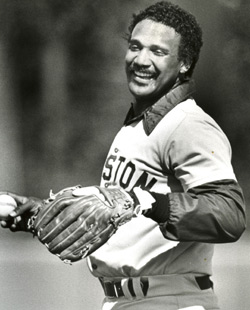
I’ve stayed away from commenting on the Rise of Jim Rice as a Hall-of-Fame candidate because the whole thing seemed inevitable, a group of self-appointed reactionaries making a comment on the steroids era. The problem is that the logic of it escaped me. “Look! Jim Rice was mediocre without the help of drugs! We’ll show Mark McGwire and the rest of those overinflated bodybuilders what we think of them by putting in this guy! Sure, he didn’t run, didn’t play defense, didn’t hit outside of Fenway Park, was done as a useful player at 33, and was completely uncommunicative, but he was clean!” The vote sure wasn’t about Rice the ballplayer, who peaked from 1977-1979 and had a bunch of seasons around those years that were just decent, and wouldn’t even rate that if he hadn’t been so good at taking advantage of Fenway. Yes, that’s a skill, but given Rice’s other shortcomings, it shouldn’t have been enough.
It’s done, though, and there’s not much to do about it but shrug. History is always a tug of war, and different perspectives gain ascendance at different times, leaving their detritus behind even as they vanish from the scene. Every Hall of Fame is like that, in whatever guise it exists. Fifty statues stand under the U.S. Capitol dome. Each state gets to send likenesses of two native greats, state hall of famers if you will. The resultant collection is a fascinating congeries of legitimate heroes and scumbags who have no business being there (as well as many complete obscurities), but I guarantee you that if we started debating exactly who belonged in each group, no two of us would come up with identical lists. In fact, I can think of reasons to disqualify some of the guys I personally favor.
Really look that list over. There are some “great” Americans represented who you would think twice about leaving alone in a room with your wallet. The Hall of Fame is a lot like that, except that the inductees should in theory be less open to debate, given that we have a statistical record of their accomplishments. The life of a president or general is not so easily reduced to wins and losses, hits and outs, and so there is more room for interpretation. With the Hall, the best you can do is make an argument that the numbers aren’t representative, that there are other factors at work, and that’s usually where Hall voters get themselves into trouble. That’s what we have here, Rice going in because 76 percent of the voters decided to put their faith in unprovable ambiguities like Rice’s fearsomeness, or even just parked their political position on PEDs over his body.
Thus, Rice is merely one more scorched-out battleground. Grass will grown on him, cattle will graze, some people will visit sometimes, perhaps. In the long run, though, just saying someone was great because you have an agenda for them doesn’t make them so. Time renders its own verdict. When some of those statues were erected under the Capitol dome, many more than 100 years ago, there wasn’t sufficient perspective for objections, for a large enough body of people to say, “Hey, wait — this guy was a drunk!” or “This guy was a slaver — why are we putting him here so school children can come through and think he’s some kind of all-time great?” When it comes to the Hall of Fame, there’s a more educated electorate on the rise, but it’s time isn’t yet here. Rice gets his plaque, and it is hoped he enjoys the honor. He certainly wasn’t a bad ballplayer. But in the final analysis, his election is a rearguard action, a reaction, and it’s not about him, it’s about honoring a time when the old men who voted for him could still claim to understand the game.
AND JUST TO KICK THIS HORSE EVEN HARDER
We’ve talked about Rock Raines and his Hall-of-Fame qualifications before; on the YES Hot Stove show, I said that if Rickey Henderson was the No. 1 leadoff hitter of all time, Raines was 1-A. I don’t want to rehearse all the arguments again, but when Andre Dawson gets 361 votes and Tim Raines gets 122, something is amiss.
RICKEY IS THE GREATEST …
… But you knew that. No disrespect to Don Mattingly, but Rickey should have had the 1985 MVP award as well.
Waiting on the 1 p.m. train to Stamford
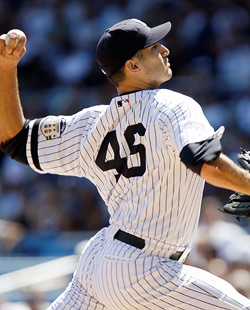 It doesn’t quite deserve Gladys Knight, does it? While I wait, a few thoughts on Andy Pettitte.
Now, I am in something of a bubble while traveling, so if in the time I compose this dispatch Pettitte has re-signed with the Yankees, joined Joe Torre in Los Angeles, retired in a fit of Cajun pique, decided to discover Japan, or volunteered for the Roger Clemens Memorial Witness Protection Program, forgive me. YES is very generous, but they haven’t yet volunteered to subscribe me to a portable broadband service and I’d feel kind of Oliver Twist-y asking. I mean, I’m the only guy in the company with his own bunker. Sure, Bob Lorenz is a much bigger name than me, but when the blow down storms come, it’s me Bob is going to have to ask for a seat in the safe room. And he’s going to be very disappointed, because my chair sucks compared to his.
Earlier this week, I remarked that the Yankees need to leave a spot in the rotation open for youth. The most obvious candidate for that spot is Phil Hughes, but it could just as easily be taken up by Alfredo Aceves, Ian Kennedy, or a darkhorse candidate like George Kontos. The Yankees need the flexibility that youth generates, because as we’ve seen this winter, we’re entering a new paradigm when it comes to free agent action. The arbitration-based compensation system is dying.
Even the Yankees were reluctant to offer their departing free agents arbitration for fear that they would accept (in retrospect, had they known the Players Association was steering free agents away from accepting such offers, they might have been emboldened to take the chance). Simultaneously, those players who were offered arbitration have seen their possibilities dry up, because the buyers have finally, finally realized, decades into the free agent process, that a team’s chances of developing a decent player for a first-round pick, one that they control for the first six years of his career, are good enough that it’s just not worth forfeiting a pick for a player like Jason Varitek, who is going to come in for a year or two, be a character guy, and then retire.
With the pick you gave up for Varitek, you could have made a conservative draft pick, selecting the proverbial polished college pitcher who is not going to develop much but should safely turn into a solid four-five starter within those same two years. Given what four-five starters cost on the open market, it’s just not worth passing one up for a 35-year-old catcher. There really was a point at which teams did not get this. At one point the Montreal Expos gave up a first-round pick to sign a third-string catcher named Tim Blackwell. You could look it up.
As a result of this, hoarding old guys has less value than ever. It used to be that a departing vet classified as a Type A or Type B free agent would leave a parting gift in the form of a draft pick. Now, with clubs hesitant to buy into the system at both ends, when they depart all the leave is an empty locker. Bobby Abreu is going to play for another few years, but the Yankees will have nothing to show for it but memories of the many fly balls that went over his head.
This makes an Andy Pettitte something of a dead end in the life cycle. Sure, he might help the club to a pennant, but you can make a strong argument that the Yankees are close enough to that already that the marginal wins he provides over a youngster — we have to acknowledge that the big zero that the Yankees received from Kennedy and Hughes last year was an unlikely to be repeated fluke — are not only not worth the money but will also leave the Yankees naked when he finally heads off into retirement. He will have blocked off a youngster for small return, won’t be bringing a draft pick, retirement or no, and so when he’s gone, there’s a vacuum where there should have been the next guy standing ready.
Conversely, if the Yankees invest 20-25 starts in a young fifth starter this year, they might get 30 starts a year for the next five, at prices they control. There’s a lot of value in that achievement and not much risk. This is particularly true because given the team’s depth in young pitchers, they can pull the plug on any failing experiment very quickly. Hughes not working out? Back to the Minors and ring in a new Kennedy administration. Kennedy has a Bay of Pigs? It’s Aceves time. Aceves’s arm falls off? Try Kontos. The point is, at the end of the season you have something you didn’t have before, an additional asset to carry you forward into 2010.
SHOW TIME!
Having written that, I am mere minutes from heading into the YES studios to get my spray-tan. Once again, the show airs at 6:30 p.m., and I’ll be checking through your comments for juicy tidbits with which to wow Bob and the gang. See you in the bunker.
More on the center field merry-go-round
 Jon Heyman of SI.com had an interesting tidbit in a recent posting about the Yankees shopping Nick Swisher and Xavier Nady:
Johnny Damon isn’t in the trade mix, as the Yankees need him to be their leadoff hitter and part of a center field rotation. The other in-house candidates for center field are Melky Cabrera and Brett Gardner.
That’s interesting, though not in the basic meaning of it — even though Damon is in the last year of his contract and is coming off something like a career season, it seemed unlikely the Yankees would try to move him, given the two roles he plays on the team, leadoff hitter, as Heyman mentions, as well as defensively overqualified left fielder. Many observers tend to focus on Damon’s poor arm, but his speed makes for a corner outfielder who can cover an unusual amount of ground.
Now, if you think about it, the most potent offensive outfield the Yankees could field next year would be Nady in left, Damon in center, and Swisher in right, rather than the presumed alternative, Damon in left, some combination of Gardner and Cabrera in center, and Xavier Nady in right — and Swisher playing the Ghost of Christmas Past, or Hamlet’s Father, or something. The problem with doing that, beyond the misuse of Swisher, is that at Damon’s current stage of the lifecycle, he’s better off not being overtaxed. Further, while his speed still does wonders in left, it’s not quite as spectacular in center — Damon had already slid off his peak the position before the Yankees moved him.
That said, being part of a center field rotation, as per Heyman above, makes all kinds of sense in that it gives the Yankees a great deal more flexibility in being able to waltz other players in and out of the corners. The more positions a star can play without compromising the defense, the better off the team is, because the club begins to close off openings for the replacement-level players that are so damaging to the winning effort. Similarly, Joe Girardi needn’t be married to any one center fielder.
There is yet another hand, which is that the Yankees might want to get married to a center fielder. Damon is in the last year of his contract, and as good as he was at 34 and may be at 35, asking him to keep it up at 36 and 37 will likely be pushing it. Given that the class of free agent center fielders next winter is going to be no fun, the Yankees will be in much better shape going into 2010 if they have the next center fielder lined up now. That could mean getting Gardner established, finding some way to electrify Melky, or even giving Austin Jackson a shot in the second half of the season, should his work at Scranton demand such an audition. Obviously the needs of 2010 have to be balanced against the goal of winning in 2009, with any luck the two goals will be mutually compatible.
One supposes the Yankees will need another leadoff man after 2009 as well. Traditional images would suggest that Gardner is the man, but Gardner may never have enough sock to justify taking up so many plate appearances, regardless of how many bases he steals. The Yankees will need to remember that your leadoff hitter need not match the picture of the singles-hitting speedster. That way lies madness. That way lies Juan Pierre. Remember, Wade Boggs was a great leadoff hitter, and he almost never stole a base. It’s about how often you’re on, not about how fast you can run. In an era of home run hitting, the rest takes care of itself.
SO LET’S TAKE THIS TOPIC ON THE AIR
Later today (6:30 EST) I’ll be appearing from the Bunker on the Yes Network’s Hot Stove show. As usual, I’ll be asked to summarize what we’ve been discussing this week. Let’s try a simple vote, which I’ll relay to the fellers on the air: who should be the starting center fielder in 2009? Damon? Gardner? Cabrera? A rotation split roughly in equal thirds? Or a write-in candidate of your choice? Jim Edmonds is still out there, and he murdered the ball for the Cubs last year. He’d be a heck of a platoon player in center. Argue it out in the comments section below, and I’ll tally up your responses while waiting for smilin’ Bob Lorenz to cast his dancing spell my way.
Does Melky deserve another shot in center?
 THEY MIGHT BE TRADING
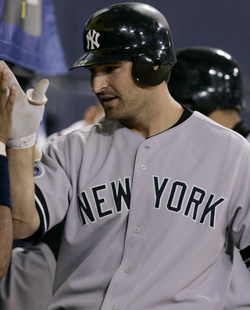
The ice keeping the outfielder/designated hitter free agent market is beginning to break up, and that can only be good news for the Yankees as they look to ease their outfielder logjam. There really isn’t much reason for a team to trade anything of value for an Xavier Nady when better players can be had for mere dollars. However, as those players fall out of the market, the losing bidders will be looking for consolation prizes, and that’s where Nady comes in.
Parenthetically, FOXSports.com’s Ken Rosenthal reports today that it’s not just Nady on the market, but that the Yankees are also floating Nick Swisher. This is so depressing a possibility that I refuse to acknowledge it. Should Swisher rebound, the Yankees will have a right fielder with a .260 average, 25 home runs and 90 walks. Should Nady return, the Yankees will have a right fielder with a .270 average, 20 home runs, and 35 walks. The difference, when you add in Swisher’s superior defensive capabilities, is between four and five wins, which is a huge number. Now, if trading Swisher nets the Yankees Tris Speaker to play center field and trading Nady does not, you could make the argument that Nady + Speaker is greater than Swisher + Brett Gardner/Melky Cabrera. Fortunately, it’s doubtful that a Tris Speaker is available, let alone that one will be made available for either player, so Nady should almost certainly be the man with the one-way airline ticket out of town.
I realize I often drop Tris Speaker’s name when talking about possible center fielders. For those that didn’t take the prerequisite course, Pinstriped Bible Background 101, Speaker, also known as the Grey Eagle, played from 1907 to 1928 and for decades was known as the quality standard for center field defense. He also banged out 3,500 hits, about 800 doubles, and averaged .345/.428/.500. Thus, if the professor says that the Yankees have a chance to get a Tris Speaker, he is referring to the idea of an impact-level, two-way center fielder. He is not referring to Mike Cameron. He is definitely not referring to Melky Cabrera. Sadly, he’s not referring to Brett Gardner either, though Gardner is almost certainly the best of the preceding three names.
Speaking of Gardner, I got a good bit of mail on the subject of he and Melky from reader Jeremy:
In your recent Pinstriped Bible column, you mention that Melky Cabrera doesn’t
deserve to keep his roster spot because: “His Major League batting averages are, in order,.280, .273, and .249. Wake me when the movie’s over.”
With all due respect, I think this deserves more analysis than you give it. Batting
averages aren’t considered to be the defining statistic in baseball anymore. I’m not
pretending to be Bill James or anything, but in 2006 and 2007 Melky posted OPS+s of
95 and 89 respectively. In 2008 he did post an OPS+ of 68, but he had the least ABs
and GP’d since his 20-game stint in 2005. His -4.0 VORP is inexcusable, but for
goodness sake his BABIP was .271! He’s a 24 year old who plays good defense and if
last April showed us anything (.291/.359/.505,6 HR,17 RBI) might have some
potential.
All I’m really saying here is that Melky deserves a much more in-depth look than
batting average can give us. I realize that April is an EXTREMELY small sample size;
but combined with his other statistics, I think that it is worth giving Melky some
growth time. After all, compare the first few seasons of Sammy Sosa with the first few seasons of Melky. I’m not saying that they will even end up being comparable, BUT early career batting averages aren’t the best way to gauge a player’s potential (just ask the Rangers if they would have traded Sosa if they had known he would put up a 201 OPS+ in 2001).
In summation, Melky hasn’t been as great as the Yankees expected him to be so far,
but his early stats show that he has some potential. He’s still only 24 and his
flash of brilliance last year shows that, from time to time, he can mash with the
best of them. Thanks for reading, Jeremy P.
Thank you, Jeremy. Good one. I wasn’t simply evaluating Melky on batting average, though he might prefer it if we stick to that because so far it’s the only offensive skill he’s shown in the Major Leagues. I’ve been through the Melky arguments enough times that I figured it was safe to give you the shorthand version. Let’s run through your points. He had the fewest at-bats of his career for a reason, namely that he was abusing the ones he was given. His batting average on balls in play was indeed low, but so was his line drive rate, and line drives are where batting averages come from. Melky spent much of the season hitting weak fly balls and grounders. It wasn’t bad luck, as we might normally infer from a low BABIP, or defenders making a fluke chain of great plays against him, he just didn’t swing with much authority. That said, even if we grant that his low BABIP could have been caused by bad luck, nothing much changes. Let’s give him the benefit of the doubt and tip him 30 points of batting average, to get him back up to the league average in the BABIP category. At best, you’d have his 2006 production … except you wouldn’t have that either, because his walk rate has also dramatically declined since then, dropping from nearly 11 percent of PAs in 2006 to just 6.5 percent this year.
There’s another problem here, which is that Cabrera is also a fraud as a switch-hitter. He is completely shut down by left-handed pitchers, with career rates of .251/.319/.329. Basically, we’re looking at a batting-average oriented platoon player who has yet to hit for an impressive average over a sustained period of playing time anywhere in his career, who doesn’t and probably will not hit for power and is not particularly selective.
That brings us to your Sosa comparison, which, respectfully, is wildly off base. First, you should recognize that Sosa is an outlier. Most players do not explode the way he did, which is just one reason why observers sometimes look at that explosion with skepticism. I’m not saying they’re correct about that, by the way, merely that the rareness of the development is one reason why. Second, the statistical similarities aren’t really there. Sosa was in the Majors at 21, still clearly learning on the job and swinging at every off-speed pitch he was offered, but still knocking extra-base hits all over the place. This correlated with what scouts were saying at the time: this guy has immense physical tools. When he hits the ball, it travels for whole galaxies. The only problem is that he doesn’t hit it often enough, but if he ever learns how to make better contact, look out. This was something you could see at the time — I have a dim recollection of him simply crushing a ball off of Dave LaPoint into the center field bleachers at Yankee Stadium in 1990.
No one has ever seen those kinds of physical tools in Cabrera. No one is predicting that kind of explosion for him, and I would argue that his approach at the plate largely precludes that kind of development. Now, I’m not prescient, and it’s certainly possible that Cabrera could change that approach, or put on 50 pounds of muscle (in a wholesome way, I mean) and start crushing the ball, or all the bad luck that you think he had in 2008 reverses, he hits .350 on balls in play this year, bats .300 on the season, thereby elevating all of his weak peripherals. Maybe, but I doubt it. I’m not much of a gambling man, but if we’re going to roll the dice that way I’d rather bet on Gardner adding a few singles and a few walks than on Cabrera changing his entire being. One is entirely within the realm of possibility. The oth
er is an almost impossible long shot.
BUNKER BOY RIDES AGAIN
I’ll be back in the Bunker on the YES Hot Stove show again this Thursday evening, so get your comments in and I’ll bug Bob and the newsprint boys about ’em. No doubt we’ll be talking about Mark Teixeira, the center field issue, and the ongoing Andy Pettitte saga. Me, I hope it keeps on going — the Yankees can and should reserve a spot in the rotation for youth.
More questions than answers in the outfield
TO THE MATS WITH READER MAIL
1: GODS AND GODDESES OF DUNGEONS & DRAGONS
I enjoy reading the Pinstriped Blog. An interesting thought came to
mind after the Teixeira signing, which I love. Who do you think is
the most powerful person in baseball — Bud Selig or Scott Boras?
Does Boras have too much influence on the game and should
something be done to limit his control of the game, like a limit on
the number of players he can represent in general or each year?
 Also, what are the best options for the Yankees in the outfield short
term and long term? If Cabrera and Gardner don’t perform well in center
field, how soon could we see [Austin] Jackson in there? Out of the
current candidates of Swisher, Nady, Cabrera, Gardner who has the
best arm (I leave off Damon and Matsui because I know they can’t
throw)? Thanks, Jeff
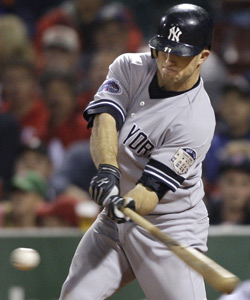
Thank you for writing, Jeff. The “power” of Boras is generally overstated. He’s a very smart, very successful agent who does good things for his clients. He doesn’t negotiate media rights contracts or decide who gets to own the Chicago Cubs, though maybe he should. He does his job, which is to drive a hard bargain for his clients. What power he has derives exclusively from teams wanting to hire the people he represents. If they refuse to bargain with him, he’s pretty helpless, although they do pay a penalty for that in not getting hold of some very good players. Power seems to imply the ability to impose your will on others, and Boras needs complicit partners before he can even start talking. As for the outfield, I believe in Gardner’s ability to get on base. The question is if he will do it often enough to overcome his utter lack of power.
As for Jackson, don’t get too excited too soon. His indifferent Arizona Fall League performance and good-not-great performance at Double-A Trenton argues for some Triple-A seasoning before he gets a crack at a full-time job. I expect you’ll see a lot of him in Spring Training just so the Major League staff gets familiar with him, and if he does well at Scranton, an injury call-up during the year is a distinct possibility. The center field job would seem to be something for 2010.
2: SOMETIMES YOU JUST FALL OUT OF LOVE (THERE DOESN’T HAVE TO BE A REASON)
Why is it that lots of Yankee fans don’t like Gardner in center? He’s
very fast, an excellent defender and wasn’t half-bad with the bat in
his second stint last year. Also, what happened to the Yankees’
fondness of Xavier Nady? It seemed like when they got him, the
organization really liked him. But now they’re thinking of trading
him? Trading away a .305 AVG, 25 HR and 97 RBI from an offense that
had trouble scoring runs last year? Does that even make sense? –Tucker
It makes a ton of sense, Tucker, because Nady isn’t really a .305 hitter. In his career, he’s been far closer to the hitter he cooled from his hot pinstriped start, a .268/.320/.474 hitter. As far as corner outfield production goes, it’s subpar. If Nick Swisher gets back on track this year, he’ll get on base much closer to 40 percent of the time and show comparable power. The value in Nady last season was that he was a huge in-season upgrade on Melky Cabrera, who he displaced from the lineup by allowing Johnny Damon to go back to center. That was a very nice move by Brian Cashman to staunch a bleeding wound, but Nady isn’t someone a championship team plans on starting.
The knock on Gardner is that he’s a banjo hitter, but as you point out he did a fine job in his second stint with the Yankees. He’s a fine defender and an excellent baserunner, and if he can get on base with any regularity, he can show that there are more ways to contribute than hitting home runs. His upside is far superior to that of Melky Cabrera, who has but one skill right now, hitting for average, and that skill was absent this season.
3: MORE ON THE THEME OF THE DAY
Steve- in your PB column of today, you indicate the Yankees should
keep Swisher and trade Nady. Certainly, last year’s numbers would
scream for the opposite course of action. You seem to be thinking
that last year was an aberration for both players and that each will
return to their prior form. I would prefer the Yankees use a six-man
rotation of Matsui, Damon, Nady, Swisher, Melky and Gardner to
cover the DH and three outfield spots. Unless the a Nady trade yields
a significant prospect or an upgrade in center field, the only reason I
could see trading Nady and not going with this six man rotation is
financial. Do you agree?–Saul
Happy New Year, Saul. One problem I see right off the bat with the Six-for-One plan is that, assuming a staff of 12 pitchers, the Yankees aren’t going to be able to carry all those outfielders plus a reserve catcher and an extra infielder. Beyond that, it’s not necessarily the best application of resources. First, Cabrera is guilty until proven innocent. He was not a great Minor League hitter, and has yet to be even average in the Majors. His big skill is that he can throw. Last year he killed the Yankees, punished them very badly given what an even subpar center fielder would have done. Many among the readership are ready to forgive and forget, but it’s not clear that there’s a good reason to expect a great deal more. Unless Cabrera develops an unexpected ability to knock balls over the wall or suddenly becomes highly selective, he’s going to have to hit .300 to create any kind of offense. His Major League batting averages are, in order,.280, .273, and .249. Wake me when the movie’s over.
Matsui’s knees may anchor him to DH, and given what we’ve seen of his defense, that’s not a bad thing. Between offensive and defensive deficiencies, there’s no reason to ever play Cabrera, Gardner, or Damon in right field. Although every one of the players you list except for Nady has been a center fielder at some point in his life, only Cabrera and Gardner really have the ability to play the position at this point. Just to sort it all out, Nady would make a fine hedge against injury. Using him to rotate Damon or Swisher out of the lineup against select pitchers or for general rest would be a great thing. There are three problems: first, Nady might not want to spend his season that way. Second, given that he just spent half a season batting .330, his value will never be higher. Third, he’s off to arbitration, so he’s about to get expensive for a bench piece. Oh, and there’s a fourth thing: at the end of the year he leaves and the Yankees have to start all over again. If he brings a more youthful body who will be under team control for several years, the greater utility might be in sending him away.
AND ON THAT NOTE…
…I send myself away for New Year’s revelry. I wish each and every one of you a safe, happy, and loving new year, and I will look forward to seeing you in 2009. May it be a very good year for us all.
Yanks should not sit tight
 Shut up, he explained
Now that Mark Teixeira is in the fold, it feels as if the Yankees can settle back, burp loudly, and wait for spring training to begin. No one would blame them if they felt a sense of completion, having picked up the two best players on the free agent market in Teixeira and Sabathia, and clearly some owners would be happier if they took the rest of the winter off, but it would be a mistake. There is still more work to do.
Before we run down the list of items that should still be on the agenda, is it possible we can have a moratorium on owners calling for a salary cap because the Yankees just purchased a player on whom they weren’t seriously bidding? Sabathia could easily have gone to the Dodgers, Teixeira to the Red Sox or even the bleeding Nationals, and these captains of industry wouldn’t have made a peep. The playing field is not even. There are ways of fixing that have little to do with salary caps, which simply transfer dough from the players to the owners without changing the competitive balance even slightly. If redistribution of wealth meant that much, revenue sharing would have already done the job, but we know what those same owners do with the revenue sharing dough–they pocket it, or use it to pay down debt on their leveraged franchises.
Until such time as these owners are ready to truly address the issues of competitive balance, which will require revisions to basic assumptions about territoriality that go back to the business’s earliest days, they can stop trying to fool the public about the need for a cap and try to beat the Yankees, which we’ve seen can be done by virtue of just being smarter. The Yankees spend, they win regular season games, but they haven’t been to a World Series in five years, haven’t won one in eight, and the Joe Torre run of great teams is a little, glorious island in a long sea of trying and failing, despite enough money to keep Steve Kemp in comic books and champagne for his next several lifetimes.
Meanwhile, the Yankees go about the work of trying to craft a winning team. I should stop there, but I won’t, and not just because I get paid to go on at great length. In a winter in which the Yankees have made great strides in pursuing the obvious, like an ace pitcher for a staff that needs an ace and a first baseman to play first base–as opposed to a designated hitter, or a catcher, or a singles-hitting left fielder, or Miguel Cairo–now are looking to get their outfield in order. They don’t have to trade Xavier Nady, but given that he’s not the hitter that Nick Swisher is, or was, given that he’s not the hitter that the average right fielder is, it makes sense to see what they can get for the overvalued corner-man. He’d make a nice reserve/injury insurance policy, but if they can get anything of long-term value for a player of his minor key skill set, arbitration eligibility, and impending free agency, they should certainly go for it. Current rumor has them doing just that. Again, it’s pursuit of the obvious. Do that often enough, and you’ll get better.
In other news…
The Red Sox signed Brad Penny, who had a truly unpleasant year with the Dodgers, concealing an injury before breaking down altogether. His strikeout rates and general career path don’t suggest that he gives the Red Sox much more than above-average depth, but that’s something. What’s most interesting in the signing is the vote of no-confidence it expresses in Clay Buchholz. One wonders if this is an effect of the Yankees’ aggressive work this offseason–it is more typical of this regime to give the tyro pitcher another shot, and just chalk up the fifth spot in their rotation to development. Given other uncertainties in their rotation, such as the health problems of Josh Beckett, the wildness of Daisuke Matsuzaka, the 42-ness of Tim Wakefield, they needed more certainty. They apparently preferred the younger Penny to old hand Derek Lowe, and one supposes that if anyone knows about Lowe they do, but Penny still seems like a gamble. One can see why they wouldn’t want another wild pitcher in Oliver Perez, but Ben Sheets would seem to have a higher upside. Perhaps the Red Sox, like the rest of us, are overleveraged.
Tomorrow…
To the mats with reader mail, so get your queries and comments into oldprofessor@wholesomereading.com.
 Pinstriped Bible